

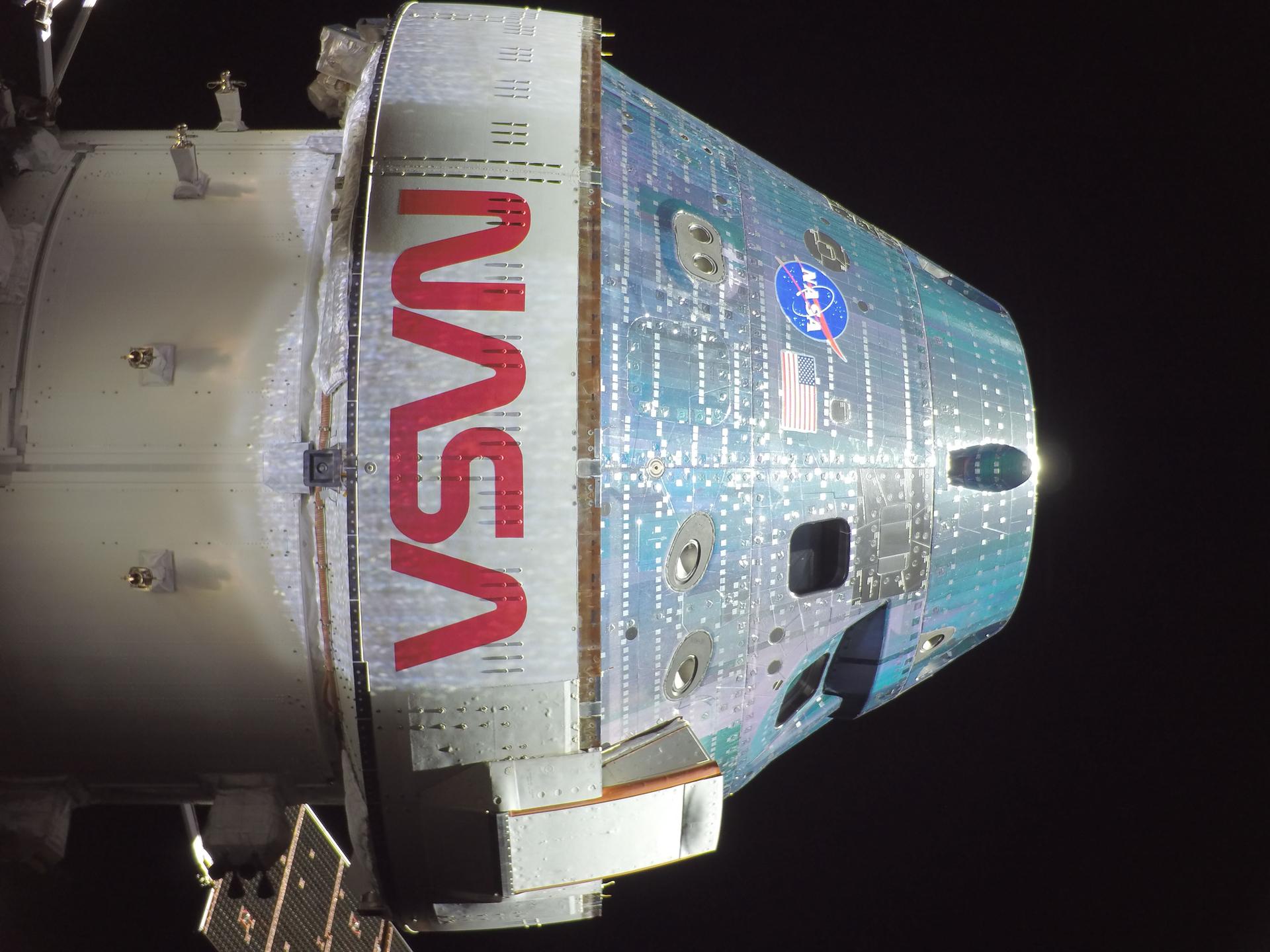
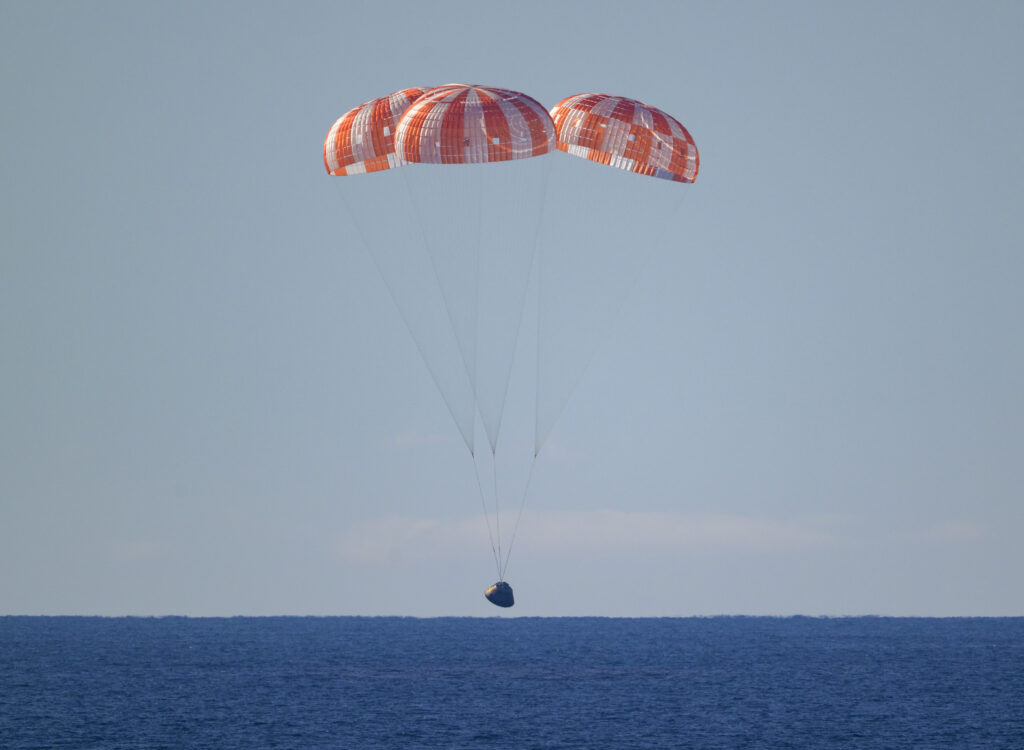
After almost 10 days of traveling farther from Earth than any humans in history, the crew of NASA’s Artemis 2 mission has finally splashed down in the Pacific Ocean on April 11.
The crew, consisting of Commander Reid Wiseman, Pilot Victor Glover, along with Mission Specialists Christina Koch and Jeremy Hansen, consisted of many firsts. Christina Koch became the first woman to complete a lunar flyby with Victor Glover, who was the first black astronaut to stay long-term in the International Space Station previously, also becoming the first black astronaut to reach the moon. Jeremy Hansen, the only nonmember of NASA on the mission, became the first Canadian to reach the moon.
After traveling more than 695,000 miles from launch to eventual splashdown and reaching 252,760 miles away at its farthest from Earth, the crew inside of the Orion spacecraft nicknamed “Integrity” along with their intrepid moon-shaped plushie named “Rise,” completed the first mission outside of low Earth orbit since Apollo 17 in 1972.
The crew aboard Integrity also broke the record previously held by the Apollo 13 mission in 1970, who were initially supposed to complete a lunar landing, but were forced to abort after an oxygen tank explosion and had to travel around the far side of the moon, reaching a maximum distance of 248,655 miles from Earth.
The Artemis mission was created in 2017, formally establishing a concerted effort to “colonize” the moon, in the hope of eventually establishing a human presence on Mars. The first mission, Artemis I, launched in 2022, serving as an unmanned test of vital flight and reentry systems that lasted for 25 days and traveled 1.4 million miles. Artemis III and IV, planned for late 2027 and 2028, respectively, plan to test lunar landing and docking, with Artemis IV planned to land the first humans on the moon since Apollo 17. Artemis V and subsequent missions plan to conduct annual lunar landings with the goal of establishing a base on the moon’s surface.
Although all crew members landed safely and in good health, the mission wasn’t without its issues. After the Orion capsule in the Artemis I mission developed significant unintended cracking in its heat shield during atmospheric reentry, in lieu of changing the heat shield, the Artemis II mission went ahead with an identical heat shield, but a revised reentry angle. This actually resulted in higher exterior temperatures, up to 5000 degrees Fahrenheit, but allowed heat to be distributed across the heat shield more evenly.
With humankind traveling farther and with active plans for a prolonged stay on extraterrestrial soil, the Artemis missions are not only paramount to preparation, but also a key factor in sustaining the wanderlust for space travel in current and future generations.
